News Center
Shandong Zhensure New Materials Technology Industry Co., Ltd.


 TEL:+86 19953115220


Choosing artificial grass is not simply about selecting a color or grass height. Different applications require different specifications, and factors such as pile height, density, backing, drainage, yarn shape, and installation conditions can directly affect the service life and performance of synthetic turf.
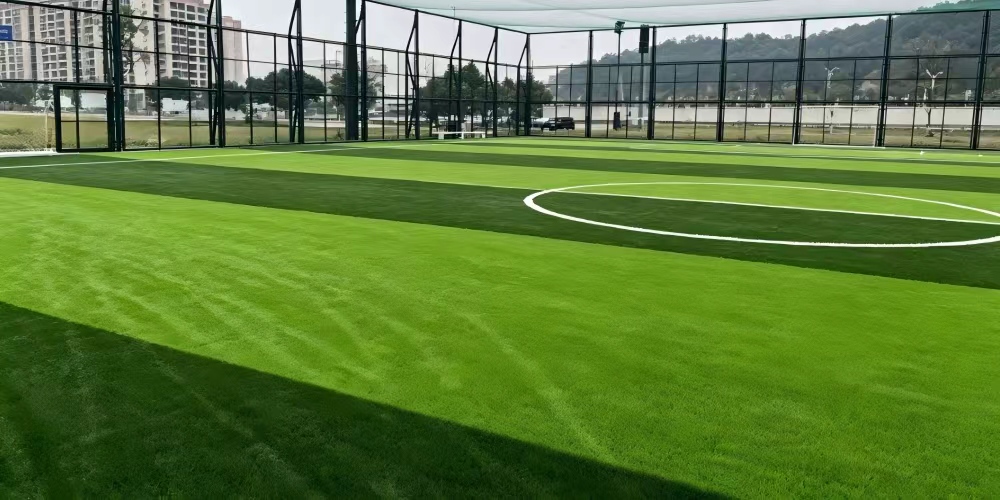
Whether you are planning a garden, commercial landscape, playground, pet area, or sports field, understanding these technical details can help you select the right product.
1. Choose the Pile Height According to the Application
Pile height is one of the most noticeable specifications of artificial turf.
For balconies, small decorative areas, and low-traffic spaces, shorter turf can be practical and easier to maintain.
2. Density Is Important for Appearance and Durability
When comparing artificial grass, buyers should not look only at pile height. Density is another important specification.
Higher-density turf generally contains more yarn within the same area, which can create a fuller appearance and better resistance to flattening. However, higher density may also increase material consumption and cost.
3. Consider the Backing and Drainage System
The backing supports the turf structure and plays an important role in installation and drainage.
For outdoor gardens and rainy areas, drainage should be considered before purchasing. Turf with suitable drainage holes can allow rainwater to pass through more efficiently and help reduce surface water accumulation.
4. Select the Right Yarn for the Usage
Artificial grass can use different yarn shapes, including flat, C-shaped, S-shaped, diamond-shaped, and other specially designed profiles.
The yarn shape affects softness, resilience, appearance, and recovery after use. Landscape turf often focuses on a natural visual effect and comfortable touch, while sports turf needs to balance resilience, durability, and ball performance.
Therefore, the “best” yarn is not universal. It should match the intended application.
Selecting the right artificial grass requires more than comparing prices. Pile height, density, yarn structure, backing, drainage, UV resistance, infill, and installation conditions should all be considered according to the actual application.
Choosing artificial grass is not simply about selecting a color or grass height. Different applications require different specifications, and factors such as pile height, density, backing, drainage, yarn shape, and installation conditions can directly affect the service life and performance of synthetic turf.
From residential gardens and balconies to commercial landscapes and pet areas, artificial grass can be adapted to a wide range of applications. Here are ten important reasons why more property owners are considering artificial grass.
When researching synthetic lawn products, buyers often come across the terms Artificial Grass and Artificial Turf. These two expressions are sometimes used to describe different products, while in many cases they refer to the same general category of synthetic grass. The actual difference usually depends more on the intended application and product specifications than on the name itself.
Artificial grass has developed into a practical alternative to natural turf for residential, commercial, recreational, and pet areas.
Artificial turf offers an alternative for homeowners, commercial property owners, and landscape designers who desire evergreen outdoor spaces and reduced daily resource consumption.