News Center
Shandong Zhensure New Materials Technology Industry Co., Ltd.


 TEL:+86 19953115220


Maintaining natural lawns requires significant amounts of water, fertilizer, pesticides, fuel, and regular maintenance. Artificial turf offers an alternative for homeowners, commercial property owners, and landscape designers who desire evergreen outdoor spaces and reduced daily resource consumption.
With proper installation and maintenance, modern artificial turf can provide a durable landscaping surface and help reduce the resource consumption typically associated with lawn maintenance.
How Does Artificial Turf Help Save Water?
Natural lawns typically require regular irrigation, especially in areas with high temperatures, low rainfall, or seasonal droughts.
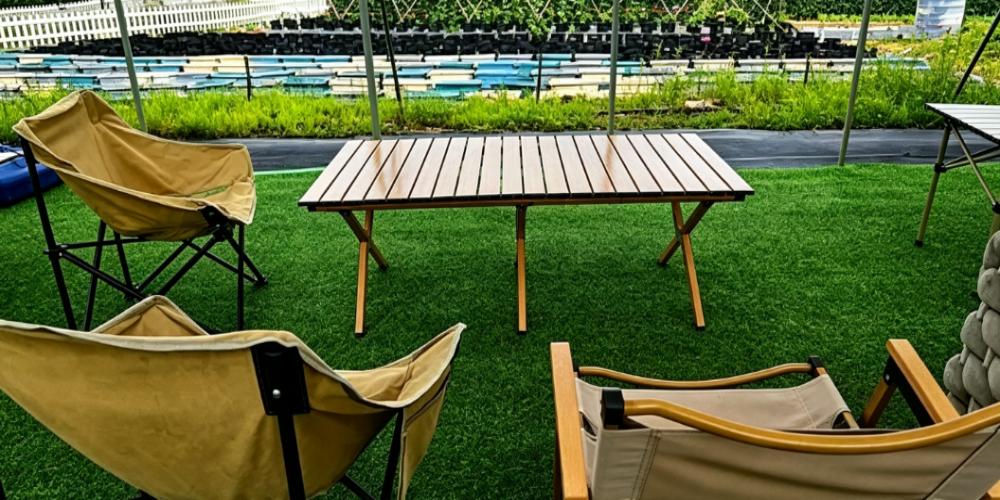
Artificial turf does not require regular watering to maintain its greenness. Occasional rinsing removes dust, fallen leaves, or other debris, but it doesn't require daily watering to maintain its appearance.
Reducing lawn irrigation can significantly decrease continuous water consumption for residential gardens, commercial landscapes, hotels, recreational areas, and other large outdoor spaces. Therefore, artificial turf is particularly useful in areas where water conservation is critical.
Reducing the Use of Fertilizers and Pesticides
Natural lawns may require fertilizers to promote healthy growth and herbicides to maintain their neat and attractive appearance. Depending on the environment, pesticides may also be needed to control insects and other lawn pests.
Artificial turf grows differently from natural lawns, meaning it doesn't require fertilizers or conventional lawn pesticides to maintain its green color. Eliminating these routine treatments reduces the amount of lawn care chemicals used around your property.
This also simplifies maintenance for homeowners and property managers who prefer a less-maintained landscaping solution.
No need for regular mowing means lower fuel consumption.
Mowing lawns is another significant aspect of traditional lawn maintenance. Gasoline-powered lawnmowers, trimmers, and other landscaping equipment consume fuel and produce exhaust emissions and noise.
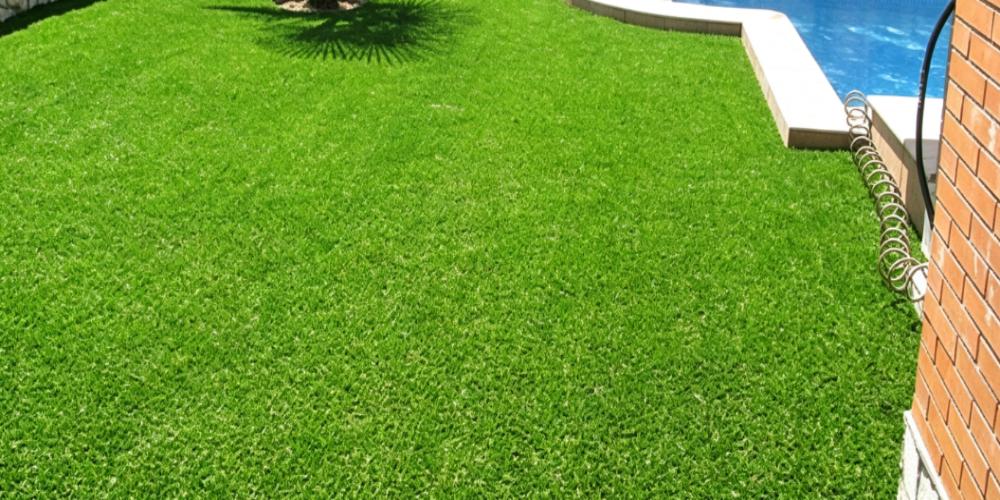
Artificial turf doesn't require controlling grass growth, thus eliminating the need for regular mowing, trimming, and maintenance. This reduces the use of fuel-powered landscaping equipment and the associated maintenance work.
For larger properties, the elimination of the need for repeated year-round mowing saves significant time and manpower.
A long-term landscaping solution.
High-quality artificial turf is designed to withstand daily outdoor use, sunlight, weather changes, and pedestrian traffic. If installed and maintained properly, it can remain beautiful and functional for many years. Its exceptionally long lifespan means homeowners don't need to frequently replace the turf or repeatedly invest heavily in landscaping.
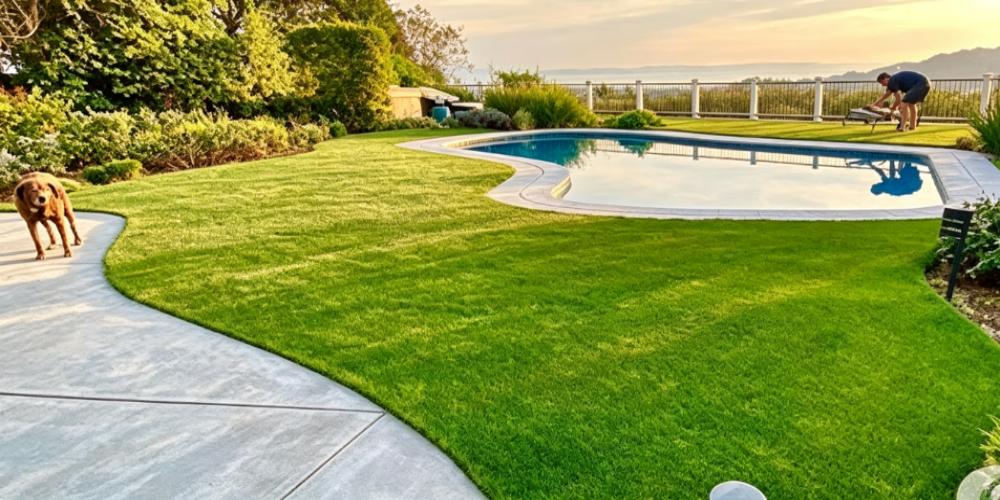
Is artificial turf right for your property?
No single landscaping solution is perfect for every location. However, for properties where water usage, turf maintenance, chemical use, or mowing are primary considerations, artificial turf can be a viable alternative.
By reducing daily irrigation, eliminating daily mowing, and minimizing the use of fertilizers and pesticides, artificial turf can help you create a landscape with lower maintenance costs and more predictable long-term upkeep.
For residential owners, commercial real estate, sports facilities, gardens, and landscaping projects, the right artificial turf product can combine durability, aesthetics, and ease of maintenance.
Looking for durable artificial turf for your next landscaping project? Choose the right turf based on your intended use, climate, foot traffic, and installation requirements. Contact us for a specific solution.
Artificial grass is a low-maintenance alternative to natural grass, but regular care can help keep it clean, attractive, and functional for many years. Whether used in gardens, sports areas, or pet spaces, a few simple maintenance steps are usually enough.
Despite these improvements, several outdated ideas about synthetic grass are still common. Here are 10 artificial grass myths that are worth understanding before choosing a product.
Choosing artificial grass is not simply about selecting a color or grass height. Different applications require different specifications, and factors such as pile height, density, backing, drainage, yarn shape, and installation conditions can directly affect the service life and performance of synthetic turf.
From residential gardens and balconies to commercial landscapes and pet areas, artificial grass can be adapted to a wide range of applications. Here are ten important reasons why more property owners are considering artificial grass.
When researching synthetic lawn products, buyers often come across the terms Artificial Grass and Artificial Turf. These two expressions are sometimes used to describe different products, while in many cases they refer to the same general category of synthetic grass. The actual difference usually depends more on the intended application and product specifications than on the name itself.