News Center
Shandong Zhensure New Materials Technology Industry Co., Ltd.


 TEL:+86 19953115220


Artificial turf mats and suspended interlocking flooring are two common types of ground covering materials. Although they have similar functions, their characteristics are quite different, and each is suitable for different scenarios. Currently, artificial turf mats are more widely used, but in certain specific situations, suspended interlocking flooring remains a necessary choice.
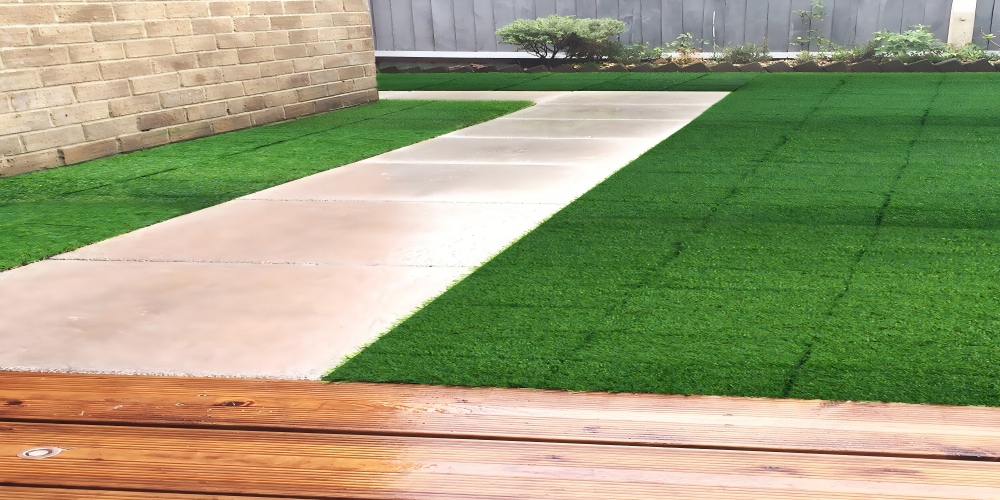
Characteristics of Suspended Interlocking Flooring
The most significant advantage is its simple construction and flexible assembly. Installation and disassembly are very convenient, offering strong mobility and reusability. In addition, it offers a wide range of colors and is resistant to fading, making cleaning and maintenance very easy.
However, suspended interlocking flooring also has some limitations, mainly due to its susceptibility to temperature changes. In environments with large temperature fluctuations, thermal expansion and contraction may occur, so it is essential to leave appropriate expansion joints during installation to prevent deformation.
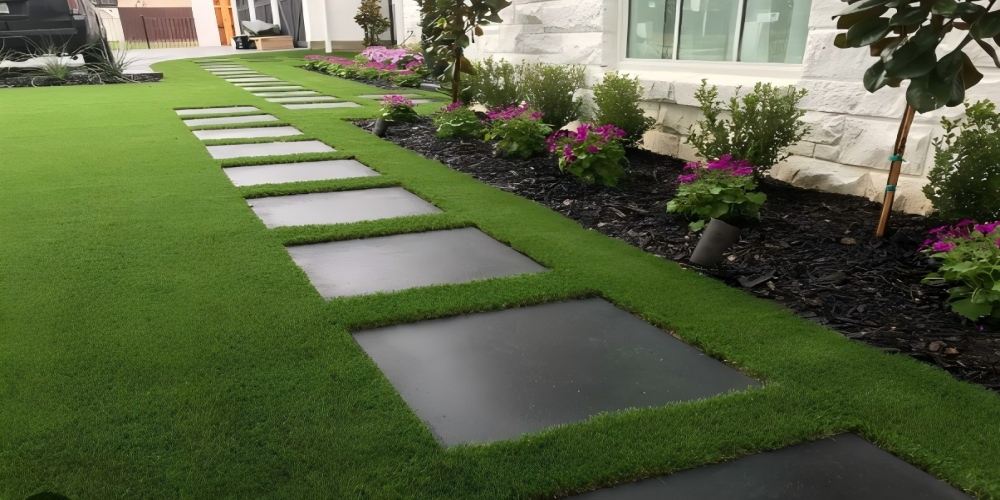
Characteristics of Artificial Turf Mats
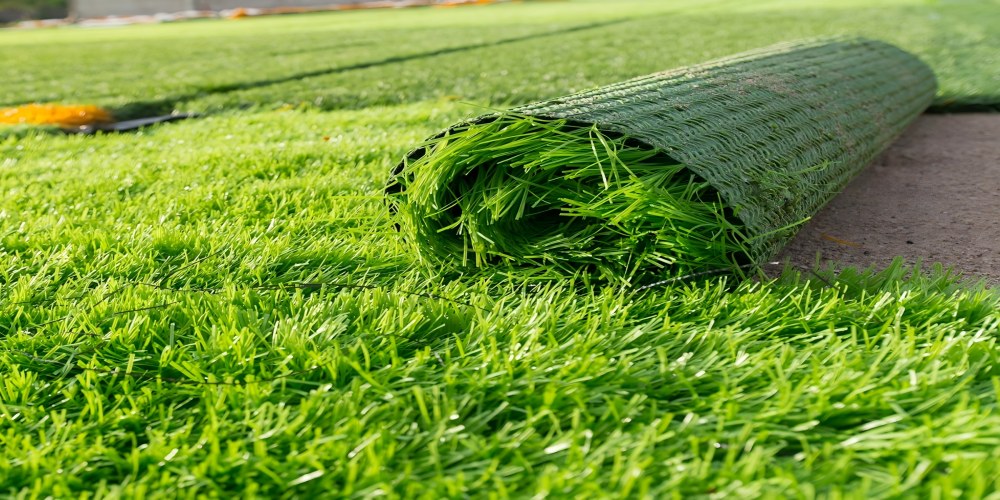
Artificial turf offers a soft touch and green visual appeal similar to natural grass, while overcoming the limitations of suspended interlocking flooring in terms of climate constraints, allowing for all-weather use.
Zhensure's artificial turf mats use the latest raw materials from major manufacturers and are processed using Belgian-imported machinery for independent grass fiber production. They exhibit excellent tensile strength, flexibility, wear resistance, aging resistance, and color fastness, resulting in high durability and an average lifespan of 6-8 years.
Zhensure's sports artificial turf, such as football turf, golf turf, tennis turf, and cricket turf, provides a feel and ball rebound speed similar to natural grass when athletes are active on it. The excellent water permeability of artificial turf allows for all-weather use of sports fields. Based on these advantages, artificial turf mats are being increasingly used in various locations, gradually replacing natural grass.
Conclusion
The choice of material depends on the specific application scenario, performance requirements, and budget. If you seek a natural texture, long-term durability, and all-weather suitability, artificial turf mats are the ideal choice; if you require frequent movement, temporary installation, or emphasize color expression, then suspended interlocking flooring is more suitable. Zhensure's artificial turf and interlocking modular flooring can meet all your needs. We also offer maximum discounts and comprehensive after-sales service to our agents and distributors worldwide, and provide end customers with complete installation guidance and after-sales support. We welcome partnerships.
Artificial grass is a low-maintenance alternative to natural grass, but regular care can help keep it clean, attractive, and functional for many years. Whether used in gardens, sports areas, or pet spaces, a few simple maintenance steps are usually enough.
Despite these improvements, several outdated ideas about synthetic grass are still common. Here are 10 artificial grass myths that are worth understanding before choosing a product.
Choosing artificial grass is not simply about selecting a color or grass height. Different applications require different specifications, and factors such as pile height, density, backing, drainage, yarn shape, and installation conditions can directly affect the service life and performance of synthetic turf.
From residential gardens and balconies to commercial landscapes and pet areas, artificial grass can be adapted to a wide range of applications. Here are ten important reasons why more property owners are considering artificial grass.
When researching synthetic lawn products, buyers often come across the terms Artificial Grass and Artificial Turf. These two expressions are sometimes used to describe different products, while in many cases they refer to the same general category of synthetic grass. The actual difference usually depends more on the intended application and product specifications than on the name itself.