News Center
Shandong Zhensure New Materials Technology Industry Co., Ltd.


 TEL:+86 19953115220


Bubbles and wrinkles that appear in artificial turf upon unrolling are common on-site problems, mainly resulting from compression during long-distance transportation, improper storage, winding stress, or careless unloading. These are usually not indicative of product quality defects. Effective physical methods can be used to repair these issues depending on the specific environment.
Seeing unexpected bumps or folds in your newly unrolled artificial grass can be frustrating. These common issues, known as bubbles (or wrinkles), usually stem from shipping, storage, or the unrolling process itself, not a product defect. The good news is they can often be corrected easily on-site with a few practical steps, ensuring a perfectly smooth installation and a beautiful final lawn.
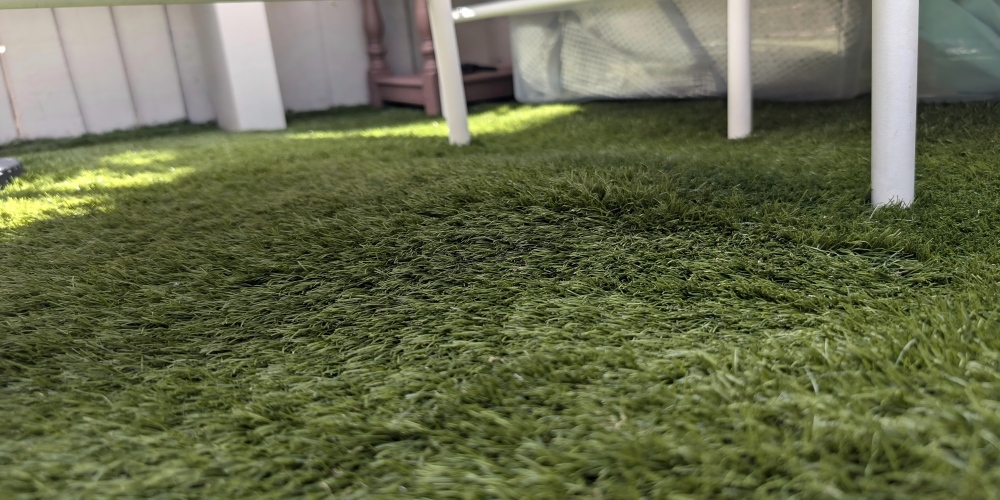
Understanding and Fixing Bubbles in the Turf
Bubbles are raised areas in the turf that create an uneven surface. They are typically caused by the tension in the turf backing relaxing after being tightly rolled for a long time, especially if stored or transported in varying temperatures. Here’s how to address them effectively:
In Warm Conditions (Above 25°C/77°F): Simply unroll the turf and let it lay flat under the sun for a few hours. The heat will soften the backing material. Once pliable, gently pull the turf flat from the edges, smoothing out the bubble with even pressure. You may need to repeat this a few times.
In Cold Conditions (Below 0°C/32°F): The material is less flexible. For minor bubbles, re-roll the turf tightly and roll the bundle back and forth over a flat surface about 50 meters to relax the fibers. Unroll and check. For stubborn cases, carefully applying warm (not boiling) water to the affected area can help soften the backing before pressing it flat.
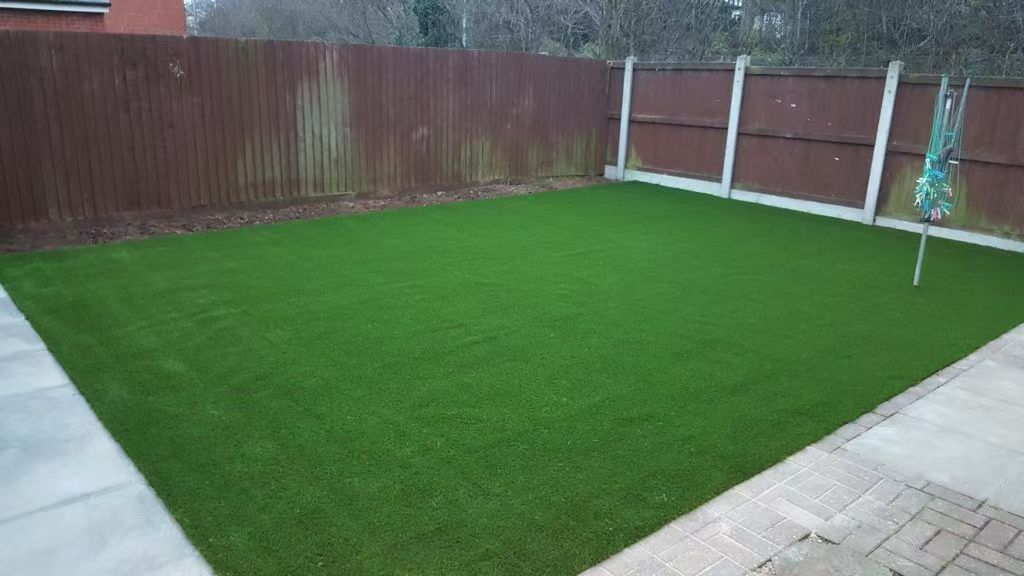
Addressing Wrinkles and Folds
Wrinkles are linear creases, often caused by the turf being unrolled incorrectly or dragged during placement. Prevention and correction are straightforward:
Unroll Properly: Always position the roll at the starting point and unroll it in a straight line. Never pull it from one end across the ground, as this causes drag and creates folds. Ensure all rolls are laid with the grass blades leaning in the same direction for a uniform look.
Let It Rest and Relax: After unrolling, allow the turf to acclimate and settle on the prepared base for several hours or overnight. This releases any residual tension in the backing.
Final Smoothing: Before securing the turf, walk over the entire surface and use your hands to smooth it out from the center towards the edges, ensuring it lies completely flat against the base.
Prevention is Key: Best Practices for Handling
Most issues can be avoided with careful handling. Always transport and store rolls upright, not laid flat. Unroll the turf as soon as possible upon delivery to its installation site. Use a smooth, firm, and properly compacted base, as an uneven sub-base is a leading cause of long-term surface irregularities.
For Flawless Results, Start with Quality Turf and Expert Support
While these fixes are effective, consistent quality from the manufacturer minimizes such issues. At Zhensure, we pay close attention to rolling and packing our artificial grass to ensure it arrives in optimal condition. As a professional factory, we provide comprehensive support and guidance to our global network of distributors and installation partners to ensure successful projects from start to finish.
Choose a partner committed to your success. If you are an importer or contractor seeking reliable, high-quality artificial turf and the technical know-how to support your installations, contact Zhensure. Let us help you deliver perfect, hassle-free results for every client.
Artificial grass is a low-maintenance alternative to natural grass, but regular care can help keep it clean, attractive, and functional for many years. Whether used in gardens, sports areas, or pet spaces, a few simple maintenance steps are usually enough.
Despite these improvements, several outdated ideas about synthetic grass are still common. Here are 10 artificial grass myths that are worth understanding before choosing a product.
Choosing artificial grass is not simply about selecting a color or grass height. Different applications require different specifications, and factors such as pile height, density, backing, drainage, yarn shape, and installation conditions can directly affect the service life and performance of synthetic turf.
From residential gardens and balconies to commercial landscapes and pet areas, artificial grass can be adapted to a wide range of applications. Here are ten important reasons why more property owners are considering artificial grass.
When researching synthetic lawn products, buyers often come across the terms Artificial Grass and Artificial Turf. These two expressions are sometimes used to describe different products, while in many cases they refer to the same general category of synthetic grass. The actual difference usually depends more on the intended application and product specifications than on the name itself.