News Center
Shandong Zhensure New Materials Technology Industry Co., Ltd.


 TEL:+86 19953115220


A common question when installing artificial grass is whether it can be placed directly on bare soil. While technically possible, it is not recommended for a long-lasting, professional result. A proper base is crucial for drainage, stability, and the overall lifespan of your lawn. Here are some key steps to consider before laying artificial turf:
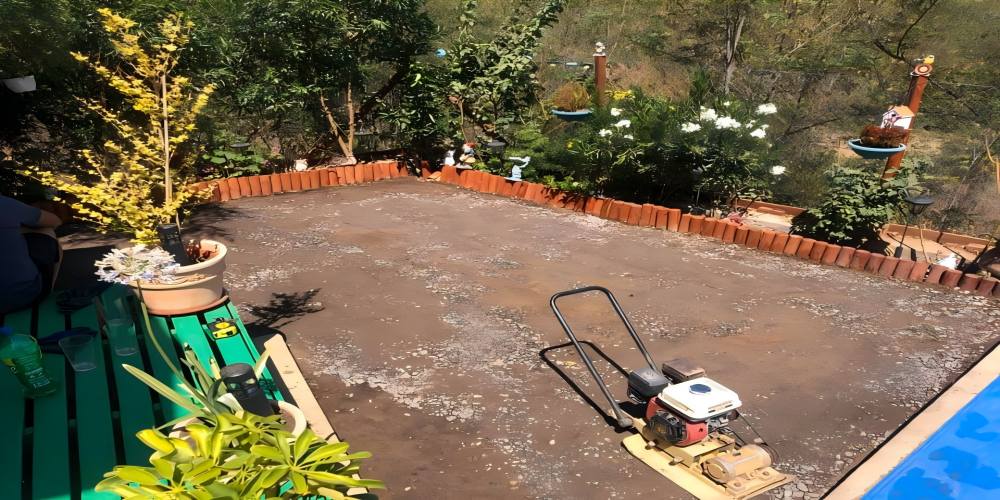
Soil Preparation:
Clearance: Remove any weeds, stones, tree roots, and other obstructions. Ensure the ground is level and free of significant unevenness.
Drainage: Ensure the ground has a good drainage system to prevent waterlogging. If necessary, install drainage channels or improve drainage conditions.
Subbase:
Base Material: To increase stability and prevent soil settlement beneath the turf, a compacted gravel bed can be added to the soil surface. This will provide a more solid base.
Sand Layer: Lay a layer of fine sand on top of the base material to level the ground and fill small uneven spots. The thickness of the sand layer depends on the type of artificial turf chosen and the specific conditions.
Installing Artificial Turf:
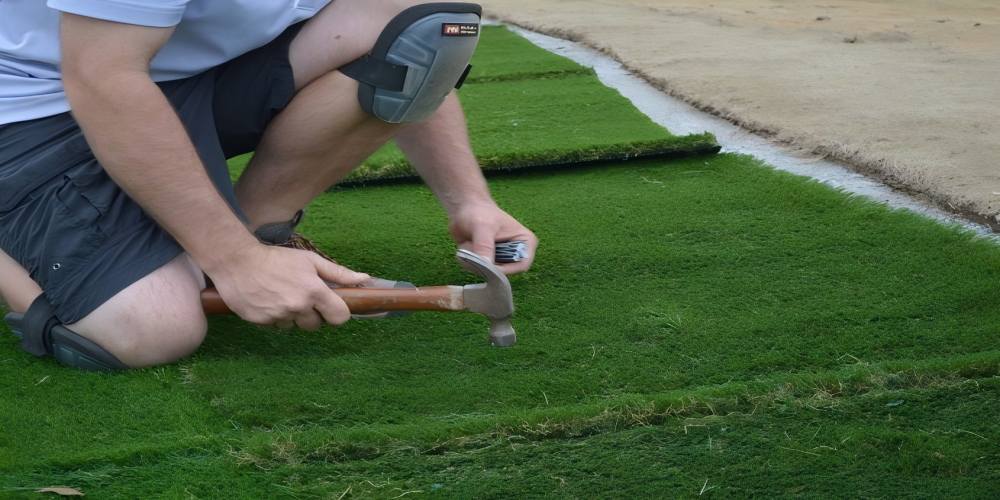
Lay: Unroll the artificial turf and cut it as needed. Ensure the turf is oriented in the same direction and that the edges are flush with the ground.
Securing: Use artificial turf anchors or glue to secure the turf to the ground to prevent movement and wrinkling.
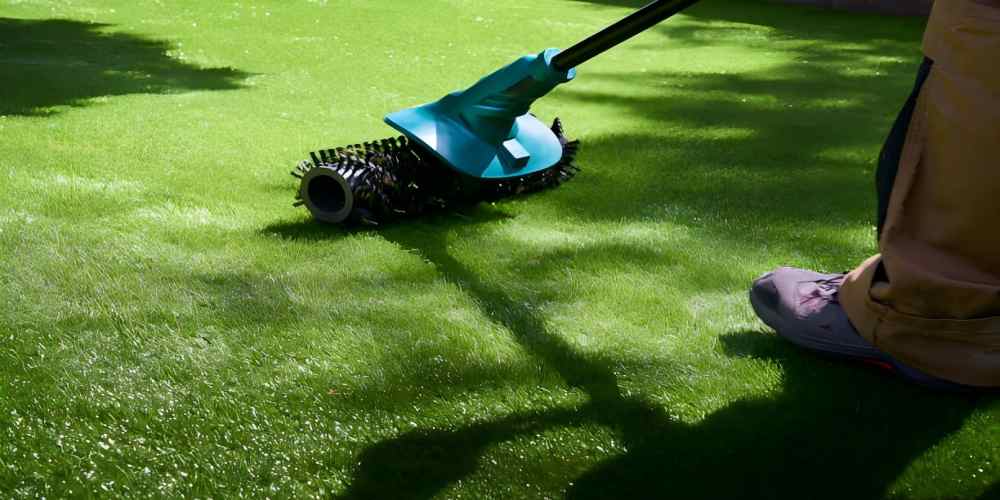
Grooming: Use a brush or brush to straighten the turf fibers, making them look more natural and even.
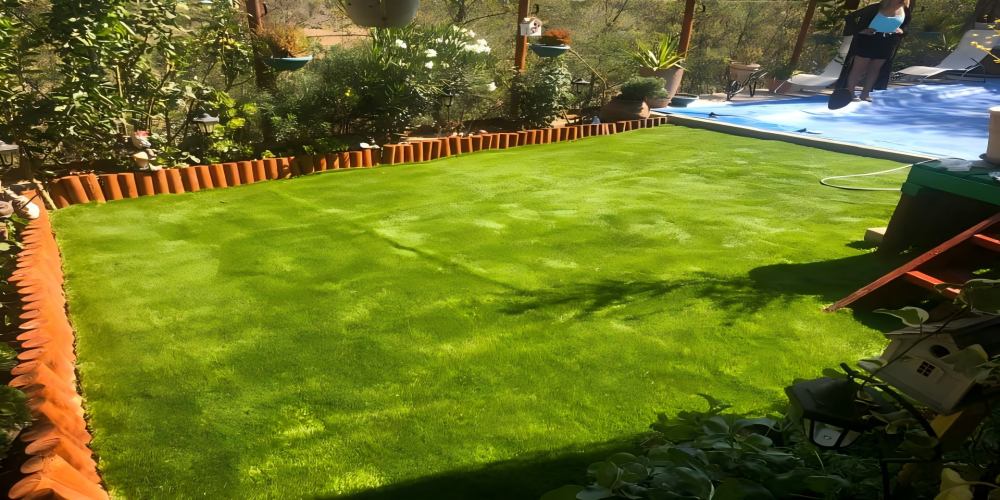
When laying artificial turf, it is recommended to follow the specific installation guidelines and requirements provided by the manufacturer. In addition, after installation, proper maintenance and cleaning are essential, including regular sweeping, weeding, mowing, and rinsing to ensure its good condition and lifespan.
Artificial grass is a low-maintenance alternative to natural grass, but regular care can help keep it clean, attractive, and functional for many years. Whether used in gardens, sports areas, or pet spaces, a few simple maintenance steps are usually enough.
Despite these improvements, several outdated ideas about synthetic grass are still common. Here are 10 artificial grass myths that are worth understanding before choosing a product.
Choosing artificial grass is not simply about selecting a color or grass height. Different applications require different specifications, and factors such as pile height, density, backing, drainage, yarn shape, and installation conditions can directly affect the service life and performance of synthetic turf.
From residential gardens and balconies to commercial landscapes and pet areas, artificial grass can be adapted to a wide range of applications. Here are ten important reasons why more property owners are considering artificial grass.
When researching synthetic lawn products, buyers often come across the terms Artificial Grass and Artificial Turf. These two expressions are sometimes used to describe different products, while in many cases they refer to the same general category of synthetic grass. The actual difference usually depends more on the intended application and product specifications than on the name itself.