


News Center
Shandong Zhensure New Materials Technology Industry Co., Ltd.
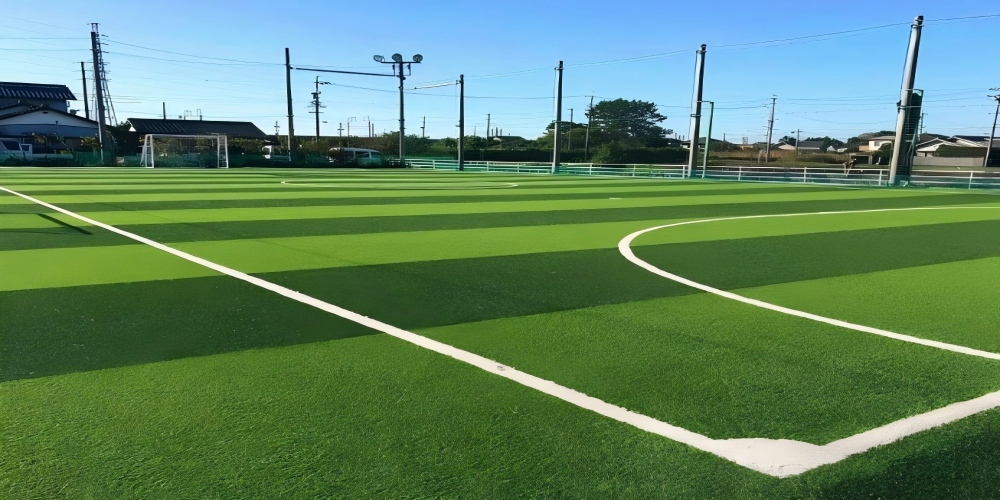
For sports facility developers, schools, and clubs planning a new pitch, constructing a Football Field with Artificial Grass is a significant project that demands careful planning. The long-term performance and safety of the field hinge on three critical, sequential steps: a flawless base, the correct turf selection, and expert installation. This guide outlines this essential roadmap to ensure your investment results in a professional, lasting playing surface.
Step 1: Foundation – The Unseen Cornerstone of Performance
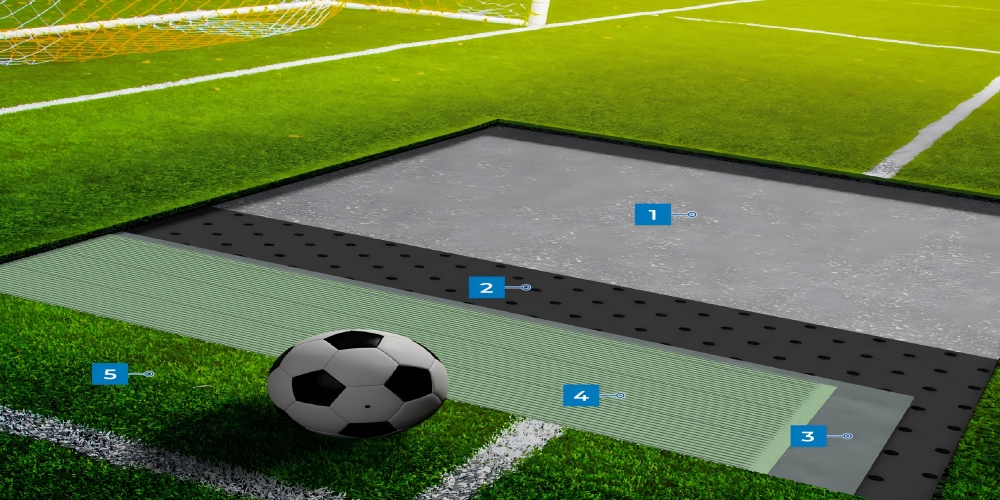
A robust base is non-negotiable. The process begins with site selection and preparation. An ideal location is well-drained and, where possible, oriented north-south to minimize low sun glare for players. The sub-base, typically of compacted stone or asphalt, must be engineered for stability and perfect drainage. Its surface must meet strict tolerances, often requiring a levelness where a 3-meter straight edge shows no gap greater than ±3mm. Neglecting this step can lead to poor drainage, uneven play, and premature wear, undermining even the highest-quality artificial grass system.
Step 2: Turf Selection – Matching Specifications to Demand
Choosing the right turf is about balancing performance, safety, and value. For a football field artificial grass, key decisions involve:
Pile Height & Density: Influences ball roll, cushioning, and durability.
Fiber Type: Monofilament or hybrid fibers offer different levels of resilience and foot-feel.
Infill System: The type and amount of sand/rubber granule infill are crucial for shock absorption, traction, and keeping the fibers upright.
Always partner with a certified manufacturer who can provide relevant test reports for critical aspects like heavy metal content, UV resistance, and abrasion durability. This data is your objective assurance of quality and compliance, far more reliable than visual inspection alone.
Step 3: Installation – Precision Execution is Key
The final step transforms materials into a field. Professional installation is vital. A qualified team will:
Verify the prepared base meets specifications.
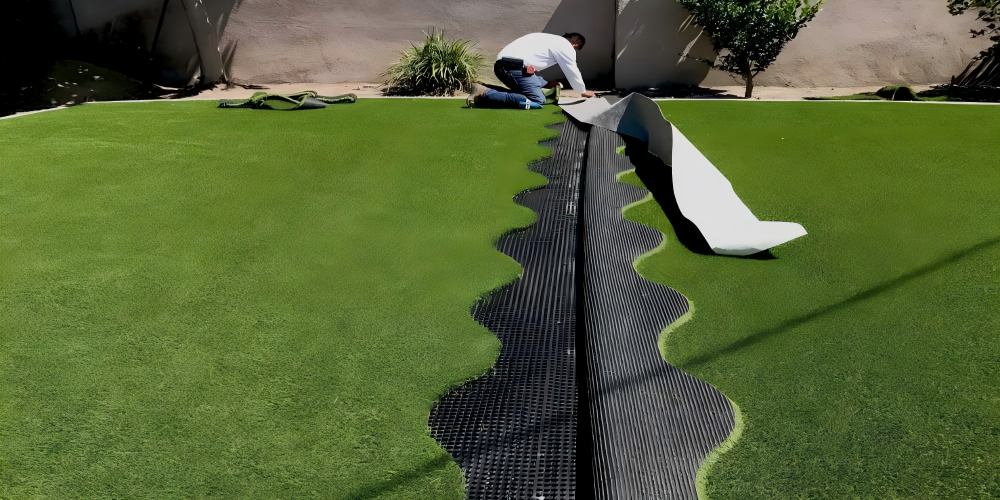
Precisely unroll, seam, and secure the turf using specialized adhesives and fasteners.
Evenly spread and brush in the required infill to the exact depth.
Conduct a final quality check for smoothness and seam integrity.
Attempting shortcuts or using unqualified labor here can lead to seams splitting, poor drainage, and an unsafe, uneven surface, voiding product warranties and necessitating costly repairs.
Your Trusted Partner for End-to-End Football Field Solutions
Building a successful pitch requires more than just products; it requires a reliable partner with integrated expertise. At Zhensure, we are a factory that provides exactly that. We supply FIFA-quality Artificial Grass systems alongside comprehensive technical support, from specification guidance to installation oversight. We are actively seeking to expand our network of professional distributors and project partners worldwide. If you are looking for a single-source factory partner committed to delivering durable, high-performance football fields, contact Zhensure today to discuss your project requirements and explore partnership opportunities.
For sports facility developers, schools, and clubs planning a new pitch, constructing a Football Field with Artificial Grass is a significant project that demands careful planning.
Artificial turf mats and suspended interlocking floor tiles are two common types of flooring materials. Although they serve similar functions, their characteristics are quite different, and each is suitable for different scenarios. So, how do you choose between them?
During the use of artificial turf fields, curling edges and seams are one of the most common problems. How to deal with curling edges on artificial turf?
Artificial turf is a non-natural type of grass made from materials such as PP and PE. While commonly used in outdoor sports fields, parks, and golf courses, it can also be installed indoors.
As the demand for durable and high-performance sports surfaces grows, artificial grass for football fields has become a popular investment. However, the significant variation in price often leads to one key question: what exactly drives the cost?