


News Center
Shandong Zhensure New Materials Technology Industry Co., Ltd.
A common question when installing artificial grass is whether it can be placed directly on bare soil. While technically possible, it is not recommended for a long-lasting, professional result. A proper base is crucial for drainage, stability, and the overall lifespan of your lawn. Here are some key steps to consider before laying artificial turf:
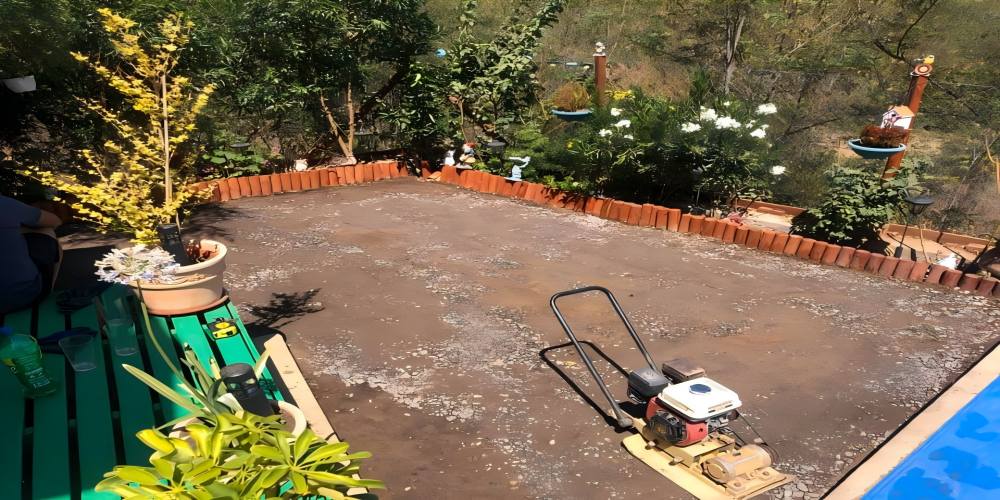
Soil Preparation:
Clearance: Remove any weeds, stones, tree roots, and other obstructions. Ensure the ground is level and free of significant unevenness.
Drainage: Ensure the ground has a good drainage system to prevent waterlogging. If necessary, install drainage channels or improve drainage conditions.
Subbase:
Base Material: To increase stability and prevent soil settlement beneath the turf, a compacted gravel bed can be added to the soil surface. This will provide a more solid base.
Sand Layer: Lay a layer of fine sand on top of the base material to level the ground and fill small uneven spots. The thickness of the sand layer depends on the type of artificial turf chosen and the specific conditions.
Installing Artificial Turf:
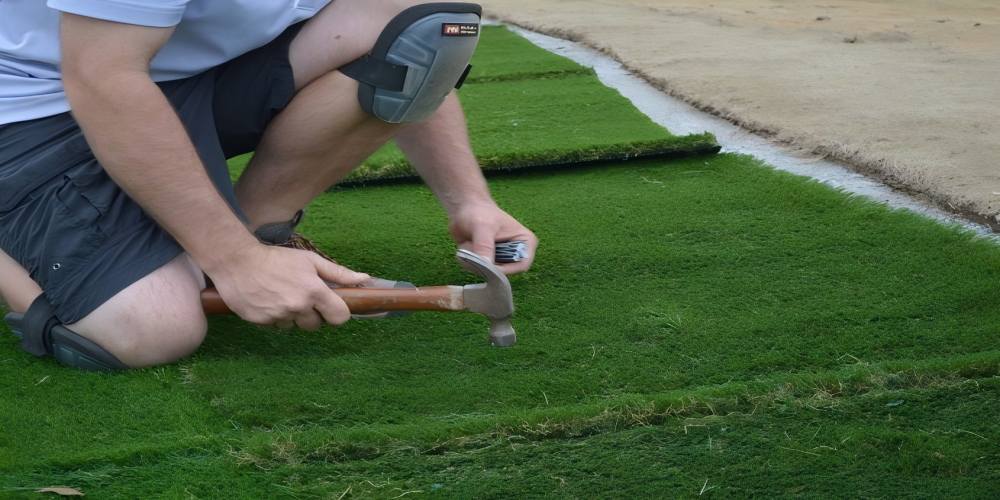
Lay: Unroll the artificial turf and cut it as needed. Ensure the turf is oriented in the same direction and that the edges are flush with the ground.
Securing: Use artificial turf anchors or glue to secure the turf to the ground to prevent movement and wrinkling.
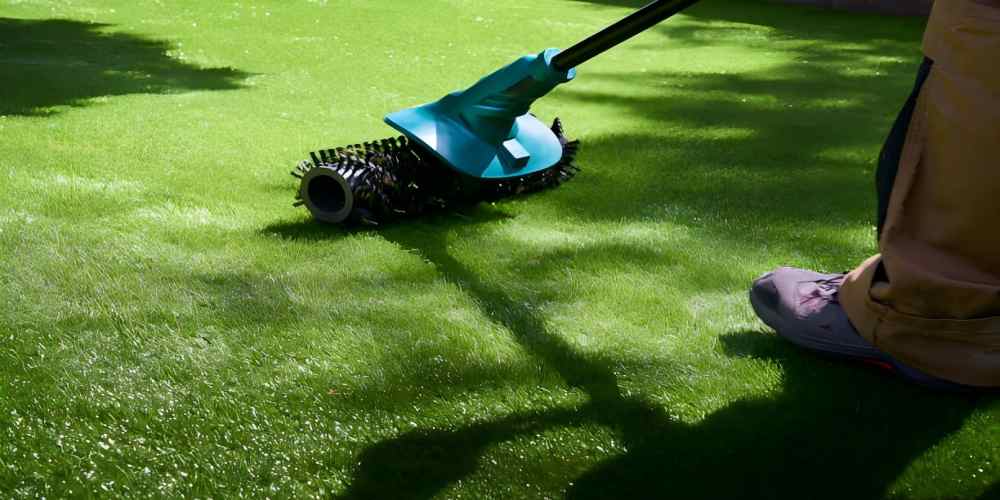
Grooming: Use a brush or brush to straighten the turf fibers, making them look more natural and even.
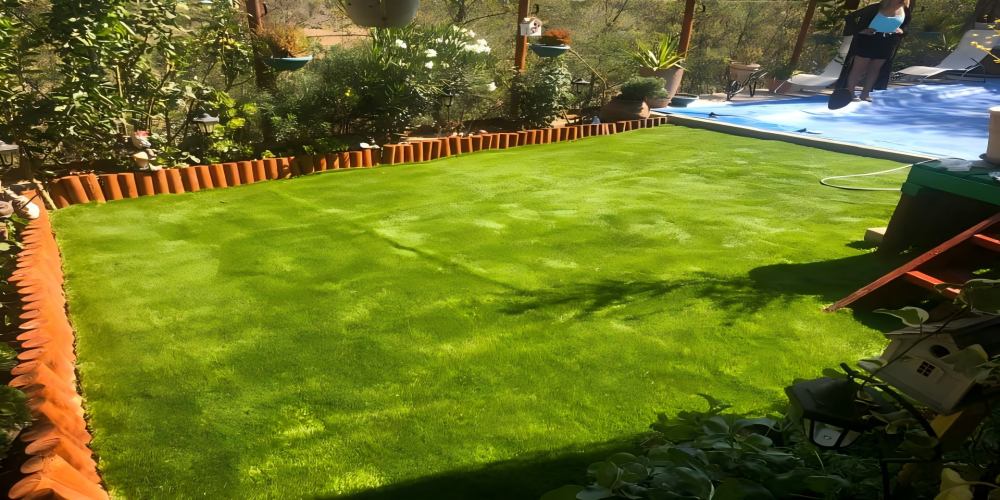
When laying artificial turf, it is recommended to follow the specific installation guidelines and requirements provided by the manufacturer. In addition, after installation, proper maintenance and cleaning are essential, including regular sweeping, weeding, mowing, and rinsing to ensure its good condition and lifespan.
For sports facility developers, schools, and clubs planning a new pitch, constructing a Football Field with Artificial Grass is a significant project that demands careful planning.
Artificial turf mats and suspended interlocking floor tiles are two common types of flooring materials. Although they serve similar functions, their characteristics are quite different, and each is suitable for different scenarios. So, how do you choose between them?
During the use of artificial turf fields, curling edges and seams are one of the most common problems. How to deal with curling edges on artificial turf?
Artificial turf is a non-natural type of grass made from materials such as PP and PE. While commonly used in outdoor sports fields, parks, and golf courses, it can also be installed indoors.
As the demand for durable and high-performance sports surfaces grows, artificial grass for football fields has become a popular investment. However, the significant variation in price often leads to one key question: what exactly drives the cost?