News Center
Shandong Zhensure New Materials Technology Industry Co., Ltd.


 TEL:+86 19953115220


Cost-effectiveness and maintenance advantages
Zero maintenance and low cost:
The artificial plant wall does not require watering, fertilizing or pruning, and the labor cost is close to zero.
It is estimated that its long-term usage cost is 75% lower than that of real plant walls.
Extra-long lifespan and stain resistance:
It does not fade for 5 to 8 years when used outdoors, and can last for over 10 years in indoor environments.
The surface is coated with a dust-proof layer.
Dust can be gently brushed off with a feather duster, making maintenance simple and convenient.
Rapid construction and customization: With modular design, the construction period is short,
and large-scale installation can be completed within one day.
It also supports customized design to meet the personalized needs of different scenarios.
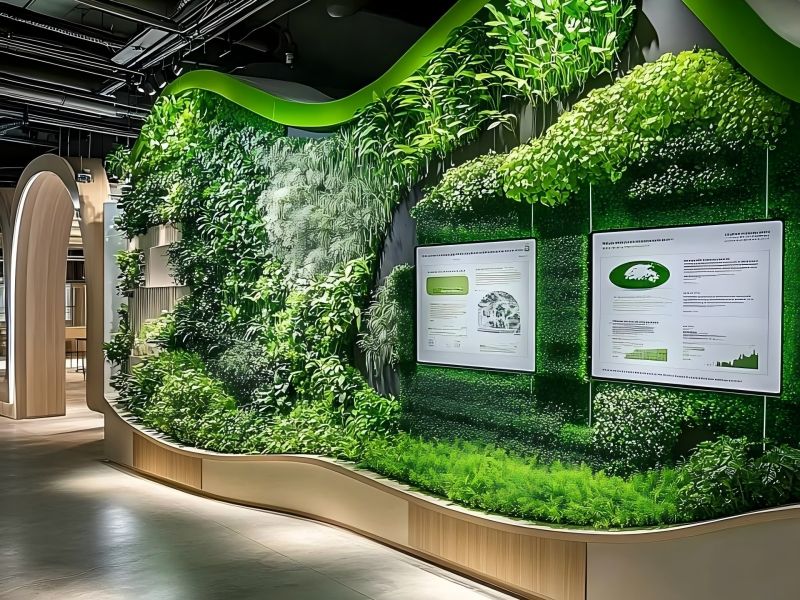
2. Environmental adaptability and safety
Extreme environment tolerance:
The artificial plant wall can withstand temperature differences ranging from -40℃ to 80℃,
and is suitable for extreme environments such as deserts, polar regions, and high altitudes.
It can be used without supplementary lighting equipment in dark environments
(such as basements and dark bathrooms), breaking through the limitations of nature.
Fireproof, flame-retardant and environmentally friendly materials:
The product has passed the B1-level fire resistance test,
and its flame-retardant performance meets the fire protection requirements for public places.
Meanwhile, 90% of the components can be recycled,
meeting the standards of green buildings and being safe and environmentally friendly.
No biological risk:
Completely eliminate mosquito breeding, avoid allergic reactions caused by pollen and plant SAP,
suitable for sensitive places such as hospitals and schools.
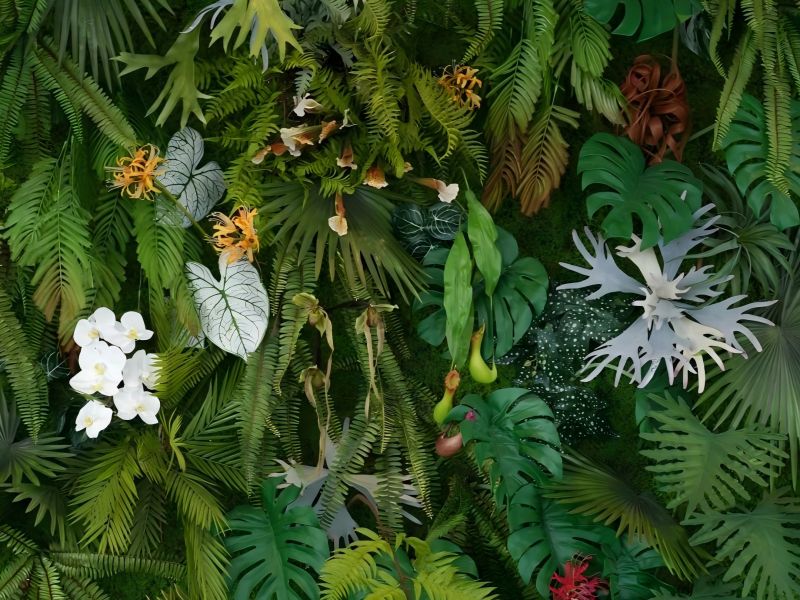
3. Application Scenarios and Innovation Trends
Wide application scenarios:
Commercial space: Enhance the image and grade of shopping malls,
office buildings and other places, and create a relaxed and comfortable environment atmosphere.
Indoor home furnishing: Add a natural touch to modern home decoration and create a warm and peaceful living environment.
Public buildings: Relieve psychological pressure in places such as hospitals and schools, and improve environmental quality.
Exhibition venue: Highlight the display theme and content features to attract the attention of visitors.
Urban greening: Solving problems such as old city renovation and street greening to create a good urban appearance.
Future innovation trends:
Intelligent interaction: Integrating sensors to achieve functions such as touch blooming and voice interaction, enhancing user experience.
Metaverse integration: Through AR technology, virtual plants are superimposed on physical walls to create surreal spatial experiences.
Carbon neutrality contribution: Replacing carbon emissions from the transportation and maintenance of real plants,
contributing to the construction of a low-carbon society.
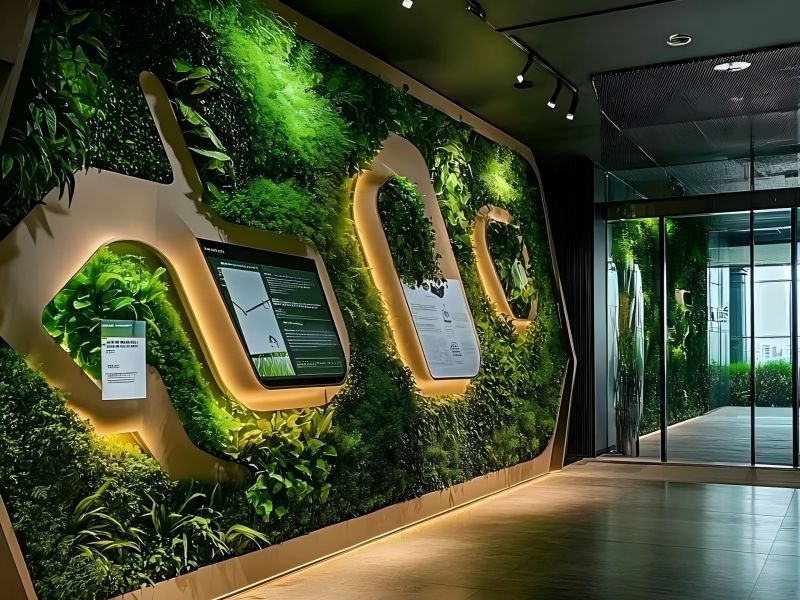
The artificial plant wall, with the concept of "technology reconstructing nature", transforms vertical greening from "bioengineering" into "spatial art".
It is not only an eye-catching tool for commercial Spaces and an aesthetic symbol for home life,
but also a "zero-burden" green solution in urban ecological construction. In an era where efficiency and aesthetics are given equal weight,
artificial plant walls are ushering in a new era of spatial decoration with an "everlasting" posture.
September is a peak month for bulk purchasing by overseas distributors; with the long winter holiday season approaching, many clients place their artificial turf orders during this time.
September is a peak month for bulk purchasing by overseas distributors; with the long winter holiday season approaching, many clients place their artificial turf orders during this time.
September is a peak month for bulk purchasing by overseas distributors; with the long winter holiday season approaching, many clients place their artificial turf orders during this time.
September is a peak month for bulk purchasing by overseas distributors; with the long winter holiday season approaching, many clients place their artificial turf orders during this time.
September is a peak month for bulk purchasing by overseas distributors; with the long winter holiday season approaching, many clients place their artificial turf orders during this time.